From Classroom Sketch to Precision Machine
It all started with a simple sketch born out of boredom in a school lesson. The initial version of my automated cocktail mixer was a testament to resourcefulness, constructed from wood and parts sourced from Amazon and a local hardware store. This first prototype, while basic, laid the groundwork for what was to come.
The project took a significant leap forward with the acquisition of a 3D printer. This new tool allowed for a complete redesign, moving from a rustic wooden frame to a precisely printed structure. The upgrade wasn't just aesthetic – I integrated peristaltic pumps and flow sensors to meticulously control the liquid volumes, perfecting the mixing ratios for each cocktail. The original LCD was replaced with a more intuitive touch display, enhancing the user interface and overall experience.
What began as a simple hobby project evolved into a sophisticated device, showcasing a journey of learning and a passion for technology.
It all started with a simple sketch born out of boredom in a school lesson. The initial version of my automated cocktail mixer was a testament to resourcefulness, constructed from wood and parts sourced from Amazon and a local hardware store. This first prototype, while basic, laid the groundwork for what was to come.
The project took a significant leap forward with the acquisition of a 3D printer. This new tool allowed for a complete redesign, moving from a rustic wooden frame to a precisely printed structure. The upgrade wasn't just aesthetic – I integrated peristaltic pumps and flow sensors to meticulously control the liquid volumes, perfecting the mixing ratios for each cocktail. The original LCD was replaced with a more intuitive touch display, enhancing the user interface and overall experience.
What began as a simple hobby project evolved into a sophisticated device, showcasing a journey of learning and a passion for technology.
Project Evolution Timeline
Phase 1: Wooden Prototype
Initial design using basic materials: wood frame, simple pumps, basic LCD display.
Proof of concept built with Amazon components and hardware store materials.
Phase 2: 3D Printed Redesign
Complete structural overhaul using 3D printing technology. Enhanced precision,
improved aesthetics, and better component integration.
Phase 3: Advanced Control System
Integration of peristaltic pumps, flow sensors, and touch display interface.
Precise volume control and enhanced user experience.
Technical Specifications
Pump Type:
Peristaltic
Volume Control:
Flow Sensors
Interface:
Touch Display
Construction:
3D Printed
Control Board:
Arduino Compatible
Liquid Lines:
Multiple Channels
Project Gallery
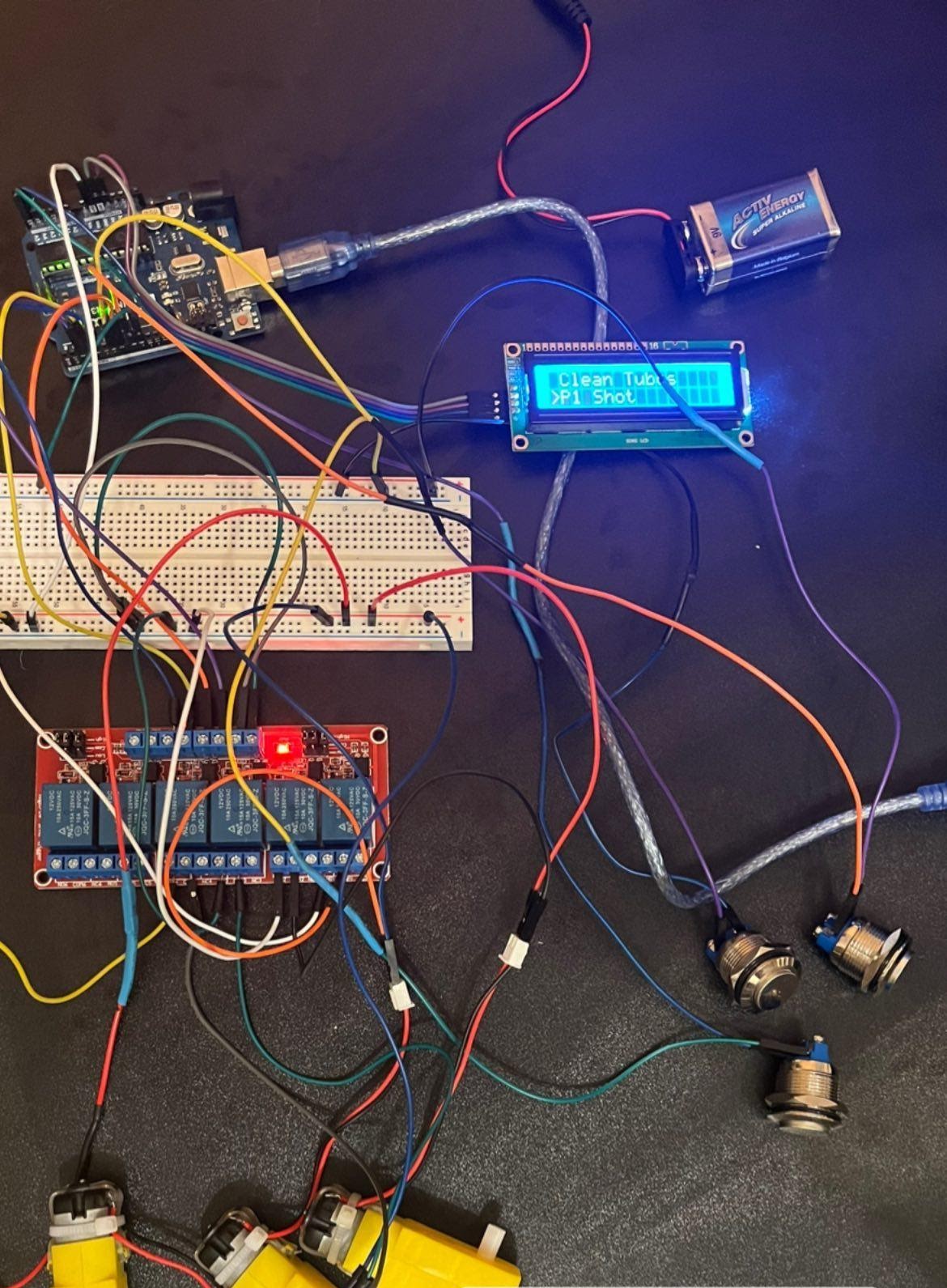
prototype_v1_electronics.jpg
Early electronics prototype featuring Arduino, relay board, LCD display, and breadboard connections.
This represents the initial control system before the 3D printed enclosure.
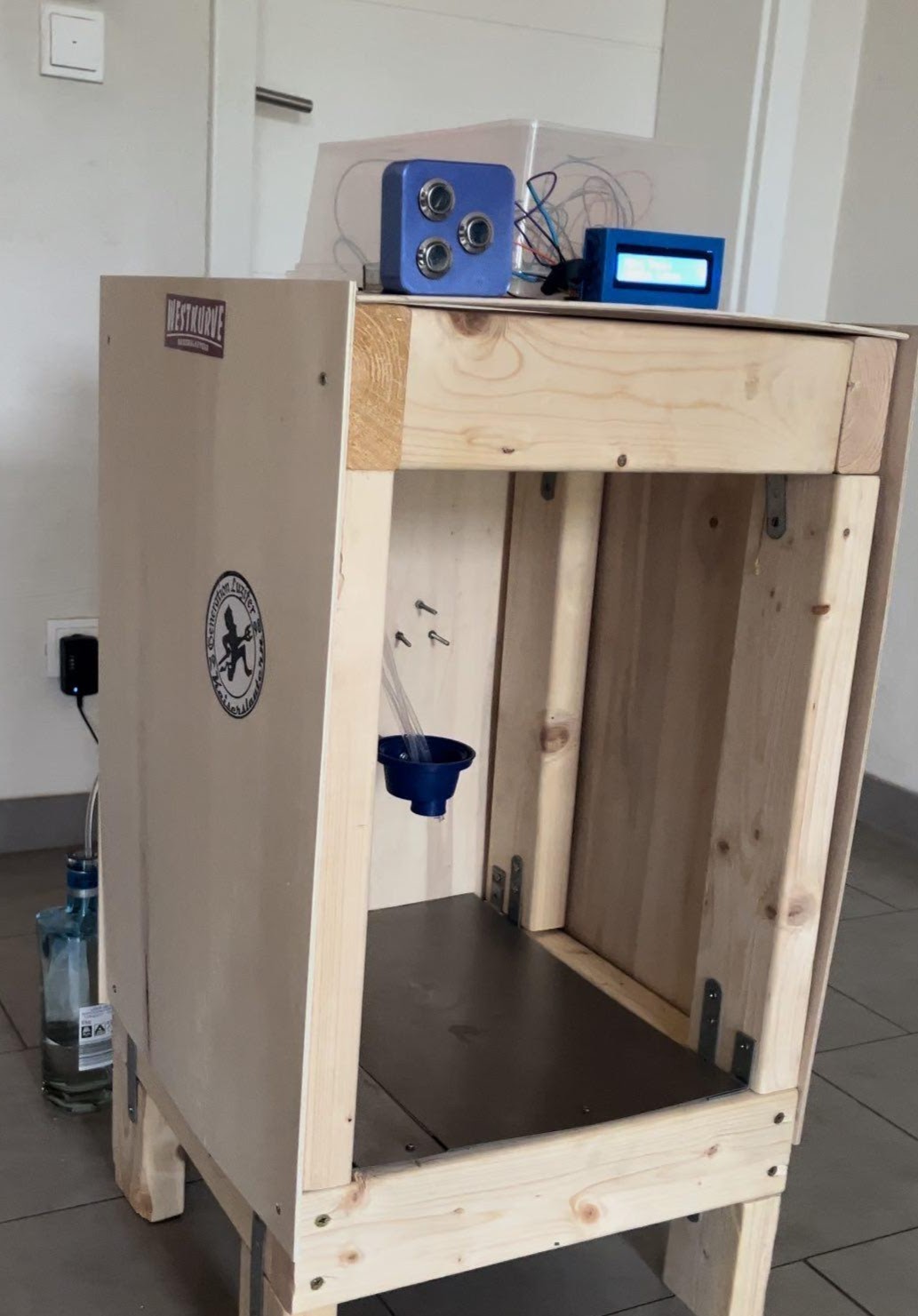
wooden_prototype_v1.jpg
Original wooden prototype showing the basic frame structure and early pump system.
Built with materials from local hardware store, demonstrating resourceful engineering approach.
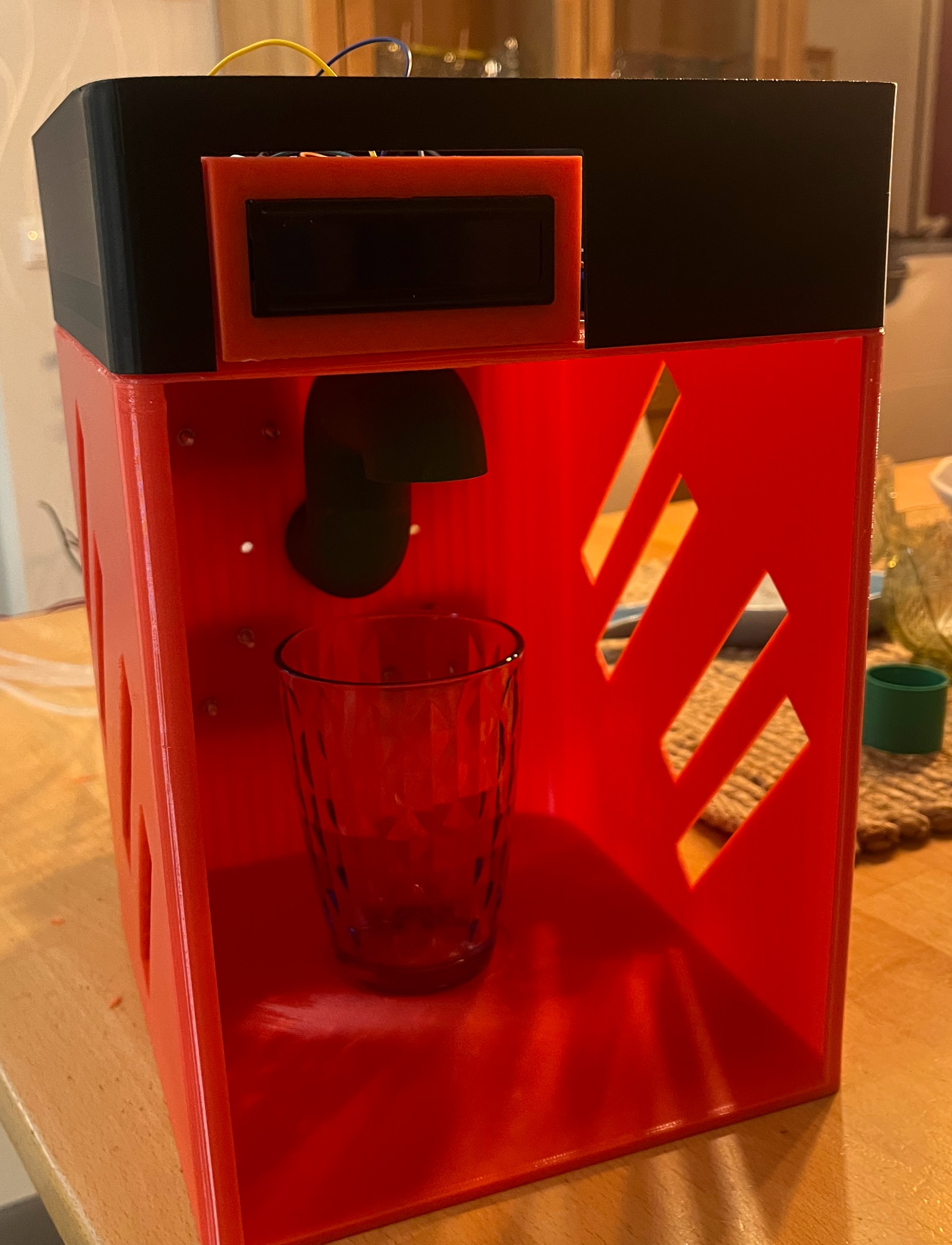
final_3d_printed_version.jpg
Final 3D printed version featuring sleek red and black design, touch display interface,
and integrated pump system. Shows the dramatic evolution from wooden prototype to professional-grade device.
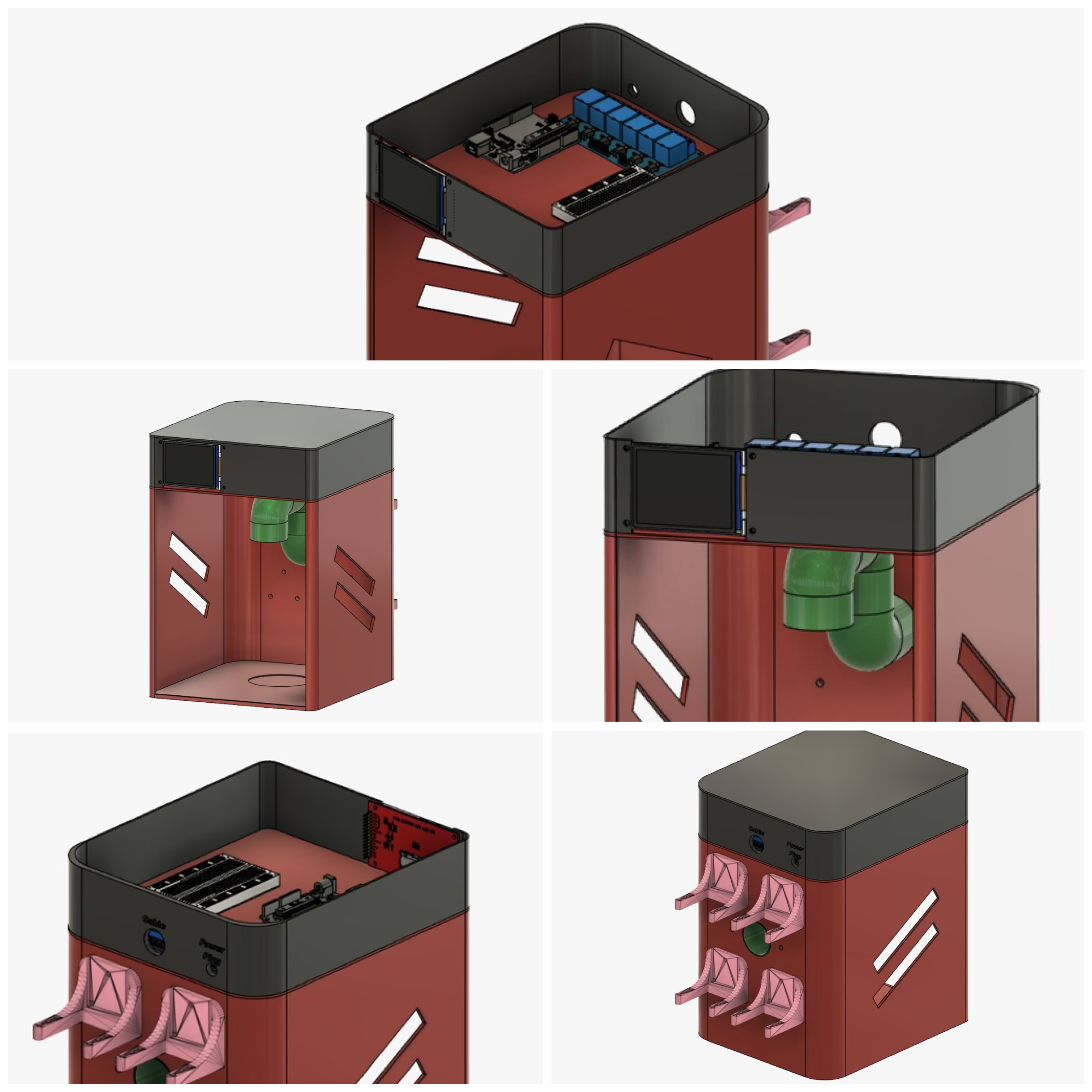
3d_design_renders.jpg
CAD design renders showing multiple views of the 3D printed enclosure.
Demonstrates the engineering process from concept to final design with precise component placement.
operation_demo.mp4
Live demonstration of the cocktail mixer in operation, showing the user interface,
pump activation, and precision liquid dispensing system in action.
Key Features
• Precise Volume Control: Peristaltic pumps combined with flow sensors ensure accurate liquid measurements for consistent cocktail ratios.
• Intuitive Interface: Touch display replaced the basic LCD, providing a modern and user-friendly control system.
• Professional Design: 3D printed enclosure offers both aesthetic appeal and functional component organization.
• Modular System: Multiple liquid channels allow for complex cocktail recipes and ingredient combinations.
• Educational Value: Project demonstrates integration of mechanical design, electronics, and software programming.
• Intuitive Interface: Touch display replaced the basic LCD, providing a modern and user-friendly control system.
• Professional Design: 3D printed enclosure offers both aesthetic appeal and functional component organization.
• Modular System: Multiple liquid channels allow for complex cocktail recipes and ingredient combinations.
• Educational Value: Project demonstrates integration of mechanical design, electronics, and software programming.
Technologies Used
3D Printing:
Custom Enclosure Design
Microcontroller:
Arduino Platform
CAD Design:
Autodesk Fusion 360
Programming:
C++ (Arduino IDE)
Electronics:
Relay Control, Sensors
Materials:
PLA, Wood, Electronics